
Be FinOps-Ready for BI and Analytics: How to Prevent Waste and Plan Cloud Spending related to BI

Introduction
We are now firmly operating in the cloud era, where technology costs are no longer fixed or predictable; everything is consumption‑based. Queries, refreshes, workloads, and user activity directly influence spending, creating financial variability that traditional financial planning was never designed to handle.
This is why FinOps has emerged as an essential practice: it brings financial accountability, engineering awareness, and operational visibility to cloud environments. BI & Analytics are now following the same path. As platforms adopt flexible compute models, more and more organizations are adopting the FinOps principles that cloud infrastructure teams embraced for BI infrastructures.
If you’re leading a Business Intelligence strategy and looking to better plan for cloud -computing costs related to BI and Analytics, you’re in the right place. This ebook introduces FinOps for BI and Analytics, explains where cost leakage happens in BI & Analytics environments, and shows how FinOps‑aligned governance helps teams bring predictability, stability, and efficiency to their cloud analytics operations.
What is FinOps?
FinOps has rapidly emerged as a critical discipline for organizations operating in the Cloud. It was born out of a major shift in how organizations consume technology. As cloud computing became the default infrastructure strategy, traditional fixed licensing models were replaced by flexible, consumption‑based pricing. Self‑service BI tools such as Power BI and Tableau are no different; they, too, have transitioned to cloud-hosted software and adopted consumption-based licensing, empowering thousands of users to create and publish analytics assets independently. This combination, however, introduced unprecedented variability in costs, performance, and governance. Organizations suddenly have lost financial control, but they don’t want to slow down innovation.
FinOps arose as the discipline that addresses exactly this challenge. It applies the principles of DevOps: agility, continuous integration, deployment, and tight feedback loops, to the world of financial governance, budgeting, and cost optimization. It is both a technical practice, driven by automation and engineering, and a cultural practice, grounded in shared accountability across teams. FinOps roles are emerging across multiple teams, such as engineering, BI, and finance teams, making cost‑awareness and responsible cloud usage a shared responsibility rather than the job of a single function. Its adoption also grew by 46% in 2025 as cost governance became a key corporate strategy among organizations.
As cloud usage grows, so does the need for smarter cost control. FinOps provides a structured approach to managing variable, consumption‑driven cloud costs, ensuring organizations can scale their platforms without losing control of spend. When done right, FinOps results in:
- Efficient resource utilization
- Optimal, value‑aligned spending
- Reduced waste and fewer misaligned workloads across cloud infrastructure and analytics environments
Why Is FinOps Gaining Momentum Now For BI & Analytics?
FinOps is gaining traction across BI and Analytics because cloud‑based platforms have fundamentally changed how analytics environments operate. Costs are no longer fixed and are difficult to predict; they fluctuate based on workload patterns, dashboard design, refresh frequency, and user behavior. As self‑service expands, organizations are facing rising financial uncertainty, unexplained cost spikes, and environments that grow faster than governance can keep up.
This dynamic is further intensified by the rise of agentic capabilities embedded directly into analytics platforms, such as Copilot in Power BI, which introduce additional compute consumption as teams leverage AI to generate insights, queries, and content at scale. As budgets remain limited, organizations must rationalize existing spend through strong FinOps to free up capacity and reinvest in these new, high‑value AI‑driven analytics capabilities.
Navigating this complexity requires automation, stronger governance, and new skill sets that blend financial awareness with technical expertise. These converging factors have made FinOps not just relevant but essential for modern BI teams as cost ownership is no longer limited to infrastructure teams. As highlighted by the FinOps Foundation, “FinOps needs to work closely with data engineers, data scientists, and platform teams to build cost awareness into their daily work.”
What are the Key Forces Driving FinOps in BI & Analytics?
Several structural changes in cloud consumption and self‑service analytics are now driving organizations toward FinOps adoption:
1. Cloud costs are volatile and difficult to predict
Consumption varies with queries, refresh schedules, and dashboard complexity, leading to unpredictable spikes.
2. Self-Service BI usage scales faster than governance
By their very nature, self-service BI environments expand at a pace that governance processes simply cannot match, which inevitably leads to a loss of control as inefficient or redundant assets quickly make their way into production. This is exacerbated by AI capabilities allowing the creation of new BI assets at the speed of light.
3. Limited visibility leads to overspend
Without proper monitoring, “noisy neighbors,” compute‑heavy dashboards, and unused datasets go unnoticed for long periods.
4. Lack of cost‑modelling expertise causes mis‑sizing
Teams frequently over‑provision to avoid performance issues or under‑provision and trigger outages.
5. Manual governance can’t keep up
Modern BI environments are too large and dynamic for manual checks; automated checks are required to enforce efficiency.
Where do BI Costs Leak in BI & Analytics platforms?
As BI environments grow and cloud consumption becomes increasingly dynamic, cost leakage often happens quietly in the background. BI & Analytics deployments accumulate inefficiencies over time, and these typically stem from five core sources:
- Inefficient Dashboards & Reports
Poorly designed workbooks and dashboards, unnecessary visuals, unoptimized data sources, slow queries, and semantic models consume extra compute and capacity.
- Noisy Neighbors
One poorly built dashboard or report, or one that contains a specific feature, can degrade performance for thousands of users, causing capacity outages and budget surprises.
- Uncontrolled Content Growth
Duplicate dashboards, stale reports, and abandoned workspaces expand compute, storage, and refresh costs.
- Lack of Proactive Alerts and Visibility
Issues are discovered after users complain, meaning platform strain or cost spikes have already occurred. Platform teams have no solutions out of the box for this; they always need to be alerted by users and build advanced applications to analyze the logs once the issues have been raised.
- Underlying Cloud Databases
Poorly optimized BI assets can silently drive up compute consumption in the underlying cloud databases (e.g., Snowflake, BigQuery, Databricks). Heavy or inefficient queries, poorly modeled semantic layers, and excessive refresh cycles push unnecessary load downstream, leading to higher warehouse compute spend and unexpected billing spikes.
Without FinOps for BI and Analytics in place, these inefficiencies escalate into major cost and performance problems.
How does FinOps‑Aligned Governance Solve the Problem?
As a consequence of BI cost leaks, FinOps is now increasingly being adopted by BI teams. FinOps-aligned governance introduces the right guardrails to operate efficiently in cloud-based analytics environments.
A FinOps‑driven approach provides three core capabilities:
- Predictability: Stable, consistent performance and fewer surprise cloud charges by ensuring workloads behave as expected.
- Control: Clear visibility into consumption patterns, report and user behaviors, refresh cycles, and resource usage across teams, workspaces, and dashboards.
- Leakage Prevention: Early detection of inefficient or risky assets (“bad actors”) before they become costly problems in production.
FinOps‑aligned governance isn’t about squeezing budgets; it’s about reducing uncertainty and ensuring that cloud analytics environments remain sustainable and predictable, and potentially reallocating budget to future projects like agentic Analytics capabilities. Instead of reacting to problems, organizations proactively monitor, validate, and optimize their analytics workloads.
In practice, this means:
- No more surprise cloud bills
- No more sudden platform slowdowns
- No more emergency capacity purchases
- No more outages
Measuring The Impact Of FinOps-aligned Governance
FinOps succeeds when BI teams can measure efficiency, stability, and cost behavior with precision. Below is a list of KPIs that help you track improvements, spot regressions early, and quantify the financial impact of governance.
Core Efficiency KPIs
- Cost per workload / cost per refresh
Highlights inefficient assets that consume excessive compute relative to their value. - Compute consumption per dashboard / model
Tracks how much capacity each asset uses to identify heavy or poorly designed content. - Storage footprint trends
Monitors dataset/model/workbook size growth to detect bloat and duplication.
Performance & Stability KPIs
- Average load time across assets
Measures end‑user experience and reveals performance regressions. - Long‑running or high‑complexity queries
Identifies assets driving slow performance or heavy strain on compute engines. - Platform saturation rate
Tracks how often capacity or compute thresholds are approached.
Governance & Utilization KPIs
- % of unused or low‑usage assets
Surfaces dashboards, datasets, or data sources that consume resources without delivering value. - Duplication rate of semantic models / data sources
Helps eliminate redundant models and reduces maintenance overhead. - Refresh frequency vs. usage alignment
Detects mismatches where assets refresh more often than their consumption warrants.
Predictive & Forward‑Looking KPIs
- Trend‑based performance degradation indicators
Highlights assets whose performance is slowly declining over time and that are likely to cause issues on the platform. - Projected compute hotspots
Forecasts future capacity pressure based on historical behavior. - Expected cost trajectory per workload
Helps teams anticipate future spend and plan optimizations before issues arise.
FinOps Maturity
As organizations begin adopting FinOps principles, it’s important to recognize that FinOps isn’t a switch you flip; BI and Analytics teams evolve through stages of maturity. Most teams start by reacting to cost surprises, progressively gain visibility, introduce automation, and ultimately reach a point where cost‑efficient analytics becomes an embedded operating model. The following maturity model illustrates this journey and helps BI leaders identify where they stand today, what gaps remain, and which capabilities to prioritize next.
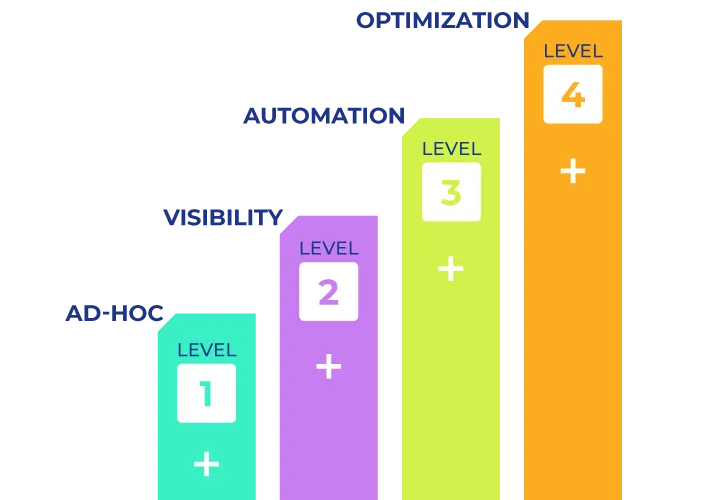
Required Capabilities
- Basic visibility into analytics consumption
- Ability to identify expensive reports/datasets
- Manual tagging or ownership of critical assets
Required Tooling
- Native platform monitoring (Power BI metrics app, Tableau Admin Views)
- Cloud cost dashboards (Azure/AWS/GCP billing)
- Manual audits of refresh patterns and workbook performance
Responsibilities
- BI: Acknowledge ownership of assets, begin tagging
- Platform: Pull consumption data manually, highlight anomalies
- Finance: Establish baseline cloud spend for BI workloads
Example Milestones
- First list the top 10% expensive dashboards
- Owners identified for major datasets/extracts
- Manual cleanup tasks executed (delete stale workspaces, remove unused extracts)
How Wiiisdom Accelerates This Stage
- Initial insights into refresh and query patterns
- First insights into “noisy neighbors” through BI assets scoring
- Faster identification of dashboards/extracts driving cloud costs
Required Capabilities
- Understanding cost drivers (semantic models, extracts, queries)
- Ability to compare cost trends over time
- Detecting early signals of performance degradation
Required Tooling
- Power BI: Detailed capacity metrics, refresh cost KPIs
- Tableau: Slow workbook insights, extract refresh duration metrics
- Logging + monitoring tools
Responsibilities
- BI: Begin addressing inefficient dashboards/reports
- Platform: Publish regular performance/cost reports
- Finance: Participate in monthly BI cost reviews
Example Milestones
- Clear visibility into top cost drivers
- Tagging and ownership improved across 50–70% of assets
- Basic thresholds defined for KPIs (e.g., acceptable refresh times)
How Wiiisdom Accelerates This Stage
- Predictive Monitoring surfaces high‑cost, high‑risk assets automatically
- Intelligent scoring provides transparency into performance + refresh footprint
- Teams move from “we think” to “we know” in cost conversations
Required Capabilities
- Automated enforcement of standards (design rules, model rules)
- Automatic detection of anomalies
- Preventing inefficient content from reaching production
Required Tooling
- Lifecycle checks for Dev → Test → Prod
- Automated alerts for long‑running queries, refresh storms, capacity spikes
- Automated stale content retirement workflows
Responsibilities
- BI: Fix issues proactively before promotion
- Platform: Configure automated rules and thresholds
- Finance: Validate cost improvements against forecasts
Example Milestones
- Inefficient content is blocked before production
- 80–90% reduction in emergency escalations
- Predictable refresh windows and stable capacity usage
How Wiiisdom Accelerates This Stage
- Lifecycle Management automates blocking of costly or inefficient content
- Predictive Monitoring proactively detects refresh storms and query explosions
- Quality gates enforce cost‑efficient analytics “by design”
Required Capabilities
- Ability to anticipate future cost, performance, and capacity risks based on historical consumption and behavior patterns
- Fully proactive analytics operations where insights drive preventive action
- Continuous optimization loops (design → measure → improve)
- Integrated governance across BI + Platform + Finance
Required Tooling
- Predictive monitoring models that forecast refresh cost trends, query complexity growth, and workload pressure
- Full lifecycle orchestration
- Trend‑based alerts that trigger before thresholds are crossed
- Cost modeling + forecasting integrated with BI workloads
Responsibilities
- BI: Build with performance and cost in mind by default
- Platform: Continuously optimize platform footprint
- Finance: Partner in quarterly predictive budget planning
Example Milestones
- Future problematic assets identified before they impact production
- Capacity strain events reduced dramatically through early intervention
- Refresh storms, query explosions, and extract bottlenecks are anticipated and managed
- Quarterly BI budgets increasingly aligned with predicted platform consumption
- Platform stability becomes consistent due to prevention rather than correction
How Wiiisdom Accelerates This Stage
- Predicts future cost spikes before they occur
- Anticipate capacity strain and resource saturation
- Trend‑based scoring predicts which dashboards, datasets, or models will become “bad actors.”
- Enable continuous right‑sizing with predictive insights
- Turn optimization into an automated operating rhythm
How To Operationalize FinOps in BI & Analytics?
FinOps for BI and Analytics becomes a continuous governance mindset, fully embedded into development, validation, deployment, and monitoring. Wiiisdom operationalizes this mindset at scale through the following two pillars:
Lifecycle Management = Prevent Costly Content Before It Hits Production
Lifecycle Management introduces checks and balances in the development pipeline:
- Automatically block inefficient or high‑footprint dashboards before they hit production.
- Enforce design and performance standards before promotion to enforce best practices by design.
- Streamline Dev → Test → Prod with automation to deploy reliable and trustworthy content.
- Govern self‑service without slowing down creators. Governance does not have to be restrictive.
- Retire unused or stale content automatically to keep your platforms healthy.
This is FinOps in action: reducing waste, avoiding over‑provisioning, and keeping environments lean.
Predictive Monitoring = Detect Cost Drivers Before They Spike
It’s not enough to just manage incoming content; you must keep monitoring it over time.
Predictive Monitoring applies intelligent scoring and automated triage to BI assets. It allows you to keep a history of this scoring to predict future consumption peaks and avoid them:
- Identify high‑cost content, heavy queries, and “noisy neighbors” early, before they negatively impact your platform
- Spot underused content or misaligned workloads
- Detect emerging issues before they affect budgets or users
- Highlight champions and laggards to guide enablement efforts and collectively improve them over time
- Provide insight to allow BI teams to continuously improve BI assets with cost in mind
This prevents capacity strain and cloud‑cost surprises.
Production Readiness Checklist
To make FinOps principles practical for you, here is a simple checklist used as a pre‑production gate. It ensures dashboards, reports, and semantic models meet cost‑efficient, high‑performance standards before reaching production.
1. Is the refresh optimized?
- Incremental refresh configured where applicable
- Unnecessary columns/tables removed
- Dataset avoids oversized partitions
2. Is the storage footprint reasonable?
- Dataset/workbook size proportionate to usage
- Extracts compressed and deduplicated
- Unused data sources removed
3. Is the semantic model reused?
- Dataset already exists elsewhere?
- Designed for shared use?
- Avoids duplication of semantic models
4. Is query folding enabled?
- Transformations fold back to source
- Make sure transformations do not block folding
- Queries optimized for pushdown
5. Does it pass performance testing?
- Load time meets SLA
- Inefficient visuals removed
- Heavy queries optimized
Production Decision:
✅ All YES → Approved for Production
❌ Any NO → Remediation required before Promotion
Are You FinOps Ready?
FinOps is now becoming essential for modern analytics teams. As BI & Analytics environments grow in complexity, the organizations that succeed will be those that embed FinOps principles into their governance, development, and monitoring practices. By shifting from reactive cost control to proactive, continuous optimization, BI leaders gain the predictability, visibility, and stability needed to scale analytics with confidence.
Frequently Asked Questions
1. What is FinOps in the context of BI and analytics?
FinOps is a cultural and technical practice that brings financial accountability to cloud consumption, helping BI teams align spend with value while maintaining performance in platforms like Power BI and Tableau. It adapts DevOps‑style feedback loops to budgeting, governance, and cost optimization for analytics workloads.
2. Why is FinOps important for Power BI and Tableau now?
Cloud‑based analytics create variable, consumption‑driven costs that fluctuate with queries, refresh frequency, dashboard design, and user behavior; FinOps provides the guardrails to control this volatility. Organizations use FinOps to gain real‑time cost transparency, financial accountability, and automation across fast‑growing self‑service environments.
3. Where do analytics costs typically leak in BI platforms?
Cost leaks often come from inefficient dashboards/reports, “noisy neighbors” that strain shared capacity, proliferation of BI assets, and the absence of proactive alerts and monitoring.
4. How does FinOps‑aligned governance reduce spend without slowing delivery?
FinOps‑aligned governance adds predictability, control, and early leakage prevention through automated checks, consistent standards, and continuous feedback during development and production.
5. Is FinOps only about cost-cutting?
No. FinOps is about aligning cloud analytics spend with business value, enabling better planning and predictability, and safeguarding performance and trust, not simply lowering budgets.
6. Who should own FinOps for analytics?
Ownership is shared across BI, platform admin, finance/IT ops, and data leadership, supported by emerging roles like FinOps practitioners and cloud economists. Collaboration ensures costs and performance are managed holistically.